THE CHANGING LANDSCAPE OF WORK
The Blueprint for Agile and Impactful Organizations.
In an era defined by rapid change, disruption, and digital transformation, organizations must evolve faster than ever before. Traditional structures, designed for control and predictability, are increasingly unfit for a world driven by agility, innovation, and human-centered design.
This white paper explores how organizational design, the strategic alignment of structure, people, and processes, helps businesses and institutions build resilience, foster innovation, and achieve sustained impact.
Drawing on global redesign initiatives and Megastruck’s cross-industry consulting experience, it outlines the key trends, frameworks, and lessons shaping the organizations of tomorrow.
THE CASE FOR REDESIGN
The world of work is transforming. Emerging technologies, new workforce expectations, and shifting business models have disrupted traditional operating patterns. Many organizations continue to operate with hierarchical, siloed structures that slow decision-making, reduce collaboration, limit adaptability and innovation.
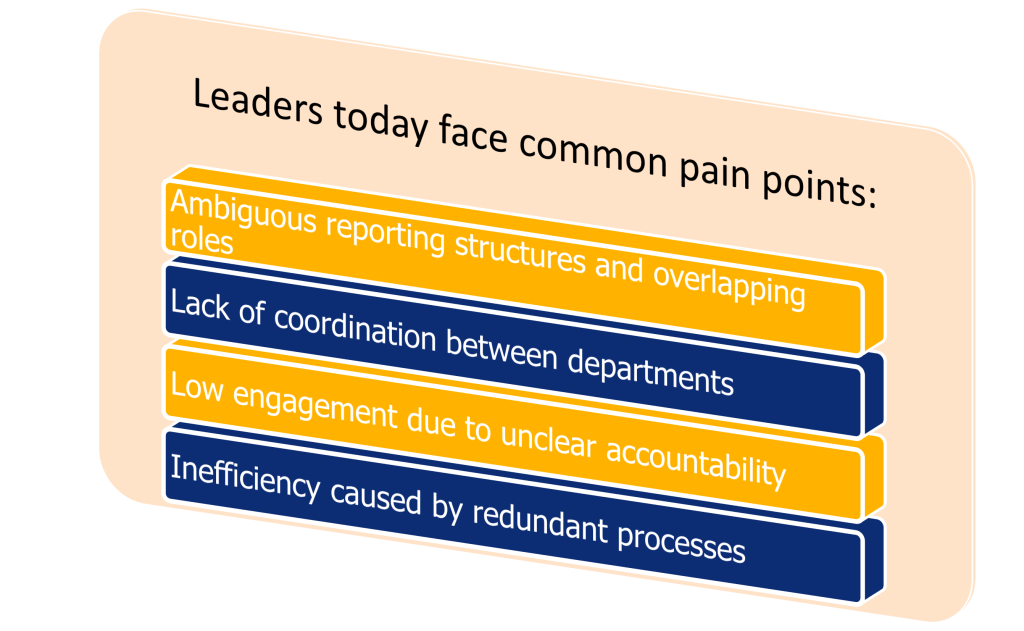
To stay competitive, organizations must shift from control-based hierarchies to adaptive networks, structures that promote empowerment, agility, and continuous learning.
WHAT IS ORGANIZATIONAL DESIGN?
Organizational design is the intentional process of aligning structure, systems, and people with strategy and purpose. It defines how work gets done, how value flows, and how organizations evolve. The key components of effective design include:
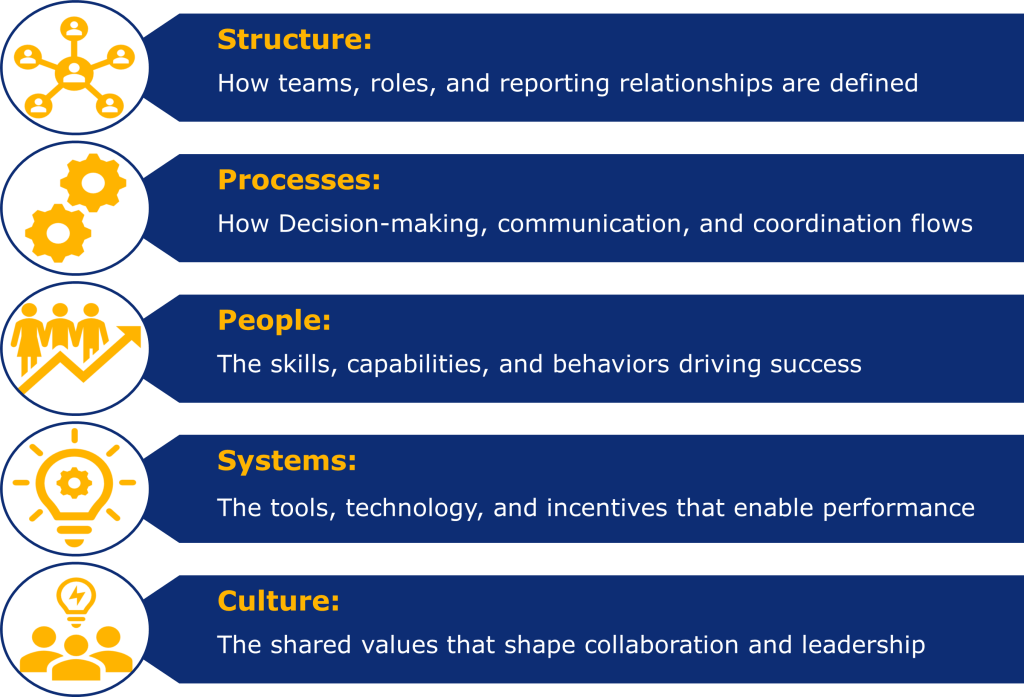
When these elements are harmonized, organizations gain agility, efficiency, and stronger cultural cohesion.
DRIVERS OF ORGANIZATIONAL REDESIGN
Organizations across sectors are rethinking their structures in response to six powerful forces:
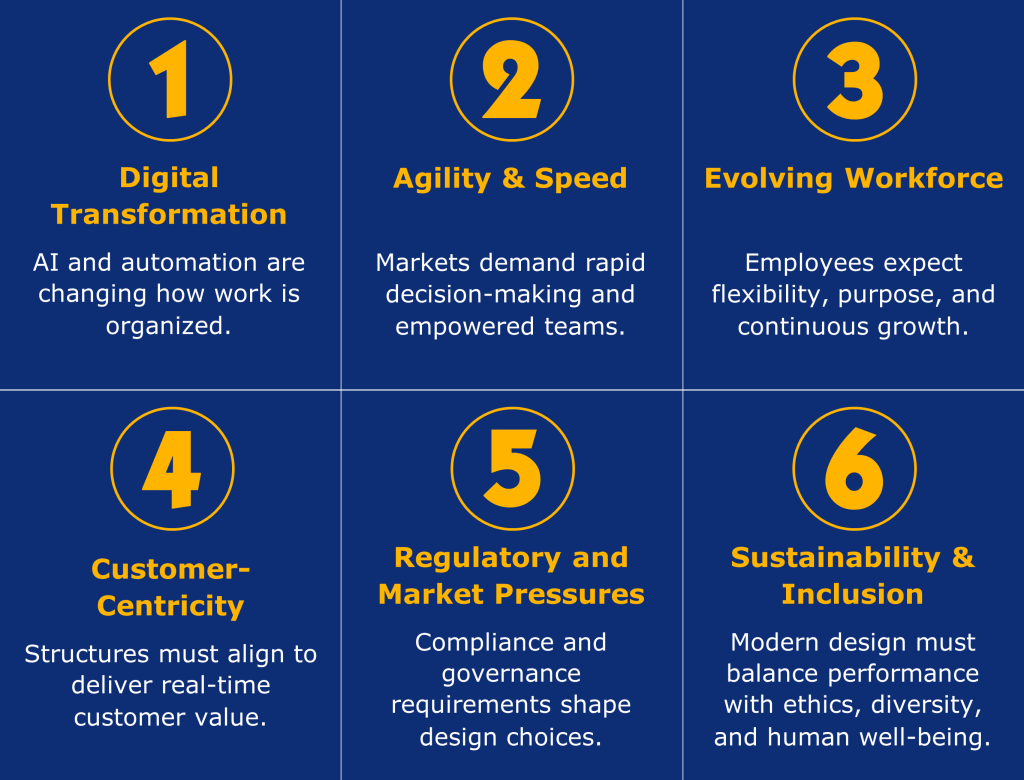
These drivers show that design today isn’t about structure, it’s about creating systems that evolve with the world.
FROM HIERARCHIES TO NETWORKS
The traditional organizational pyramid, built on control and linear communication, is giving way to network-based models that emphasize connectivity and collaboration.
Modern organizations are:
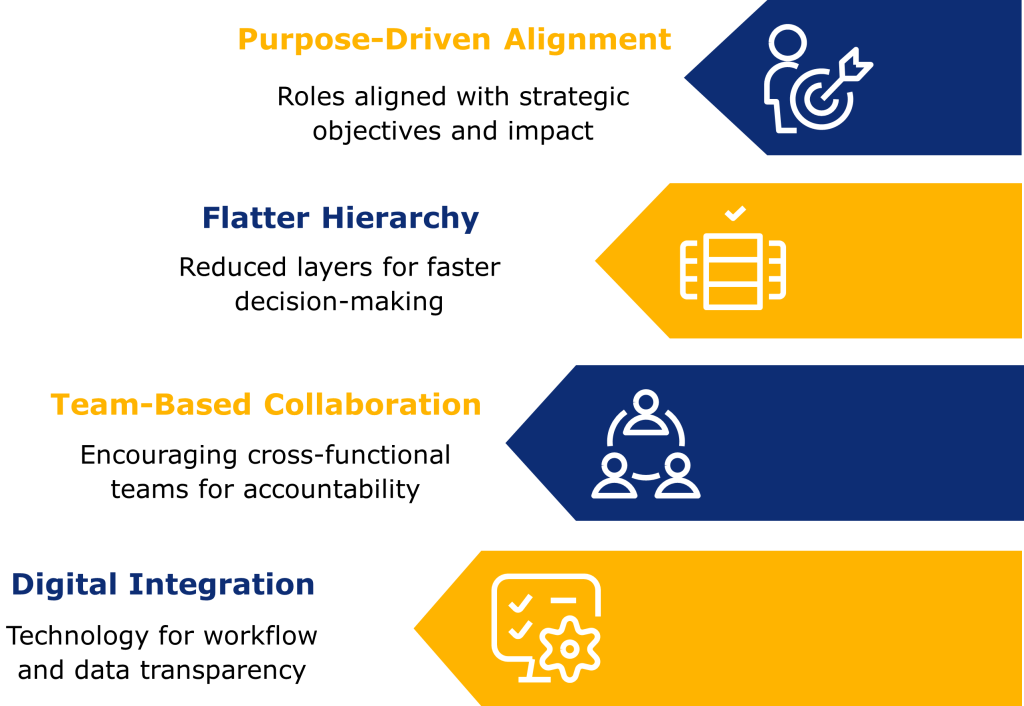
This shift moves organizations from control to connection, from efficiency to innovation.
GLOBAL MARKET PERSPECTIVES: ORGANIZATIONAL DESIGN IN ACTION
To understand how leading organizations are translating strategy into structure, it is important to observe global redesign efforts that are redefining how companies operate in 2025. These examples demonstrate how large enterprises are embedding AI, agility, and integration at the core of their structures.
Accenture: Reinventing Through Integration and AI
In 2025, Accenture undertook a major redesign of its global organization with the ambition to become the world’s most AI-enabled, client-focused professional services firm. The company consolidated its five service lines, Strategy, Consulting, Technology, Operations, and Song (the creative agency), into a single integrated business unit called Reinvention Services, led by Manish Sharma.
This transformation allows for:

The redesign enables stronger alignment, enhanced agility, and accelerated innovation by embedding AI and data-driven insights across every process. Accenture’s reinvention reflects a broader market trend where structure becomes a catalyst for intelligence, coherence, and continuous innovation.
(Source: Accenture Reinvention Services, 2025 Announcement)
Microsoft: Balancing Agility and Strategic Coherence
Microsoft’s 2025 organizational design represents a hybrid model that merges functional and product-based divisions to enhance innovation and responsiveness. Under CEO Satya Nadella, the company centralized leadership for strategic coherence while empowering product groups for faster decision-making.
By merging the AI and Research Group with the Cloud and AI Platforms, Microsoft created a structure that fosters both stability and speed. The outcomes include:

This hybrid model strengthens Microsoft’s global competitiveness by allowing it to move with agility while maintaining clear strategic oversight, a hallmark of the next-generation organizational design philosophy.
(Source: Microsoft 2025 Organizational Design and Leadership Update)
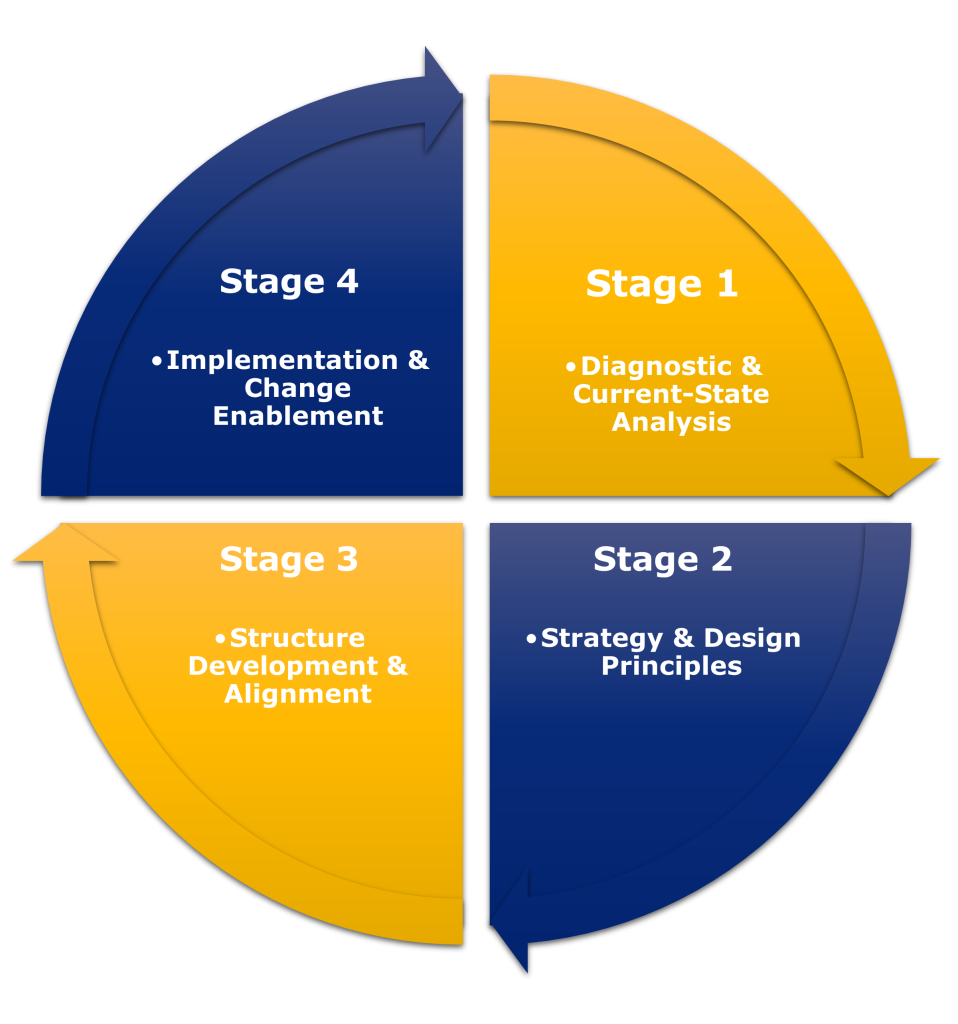
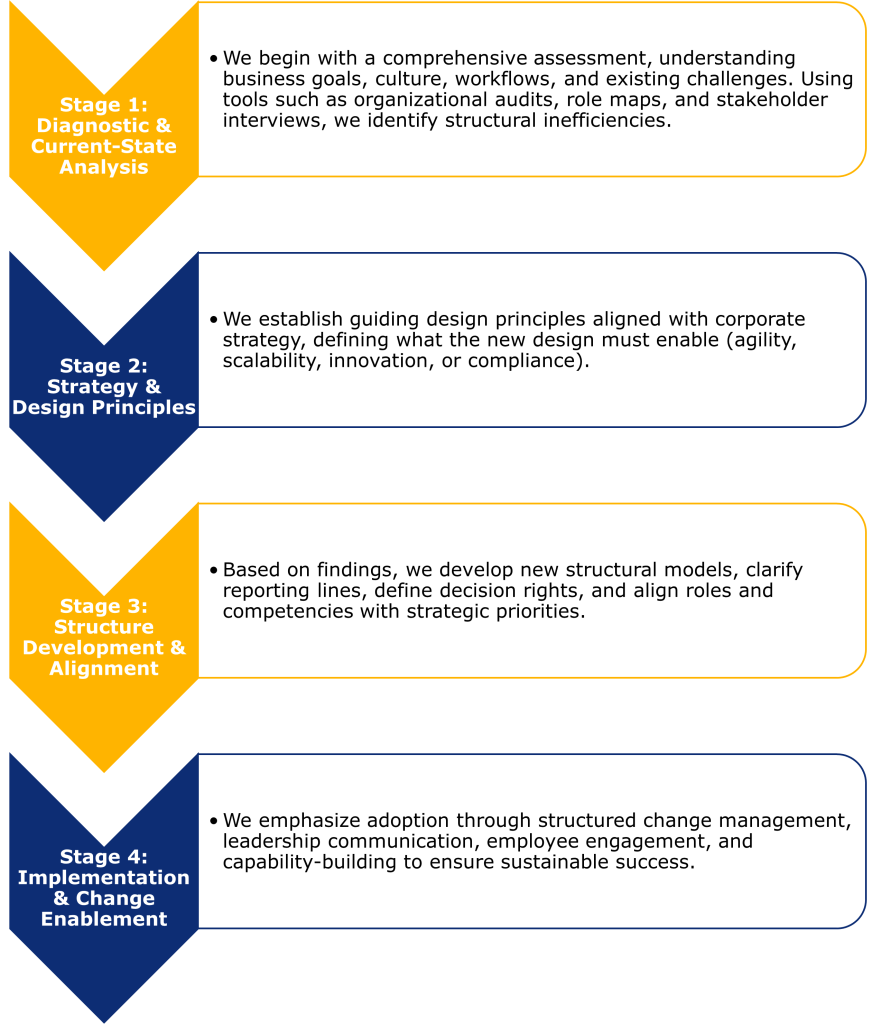
THE MEGASTRUCK ORGANIZATIONAL DESIGN FRAMEWORK
Megastruck’s approach to organizational design combines strategic clarity, diagnostic precision, and people-centric implementation.
CROSS-INDUSTRY CASE INSIGHTS AND EXPERIENCE
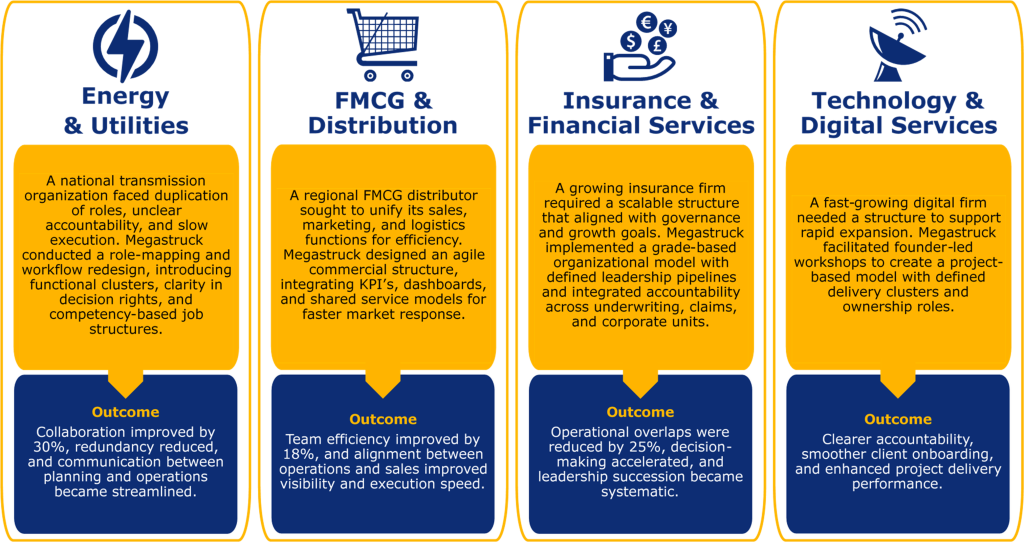
Megastruck has delivered organizational design and transformation projects across energy and utilities, insurance and financial services, FMCG, and technology sectors. These experiences demonstrate our ability to adapt design frameworks to diverse business realities while achieving measurable performance gains.
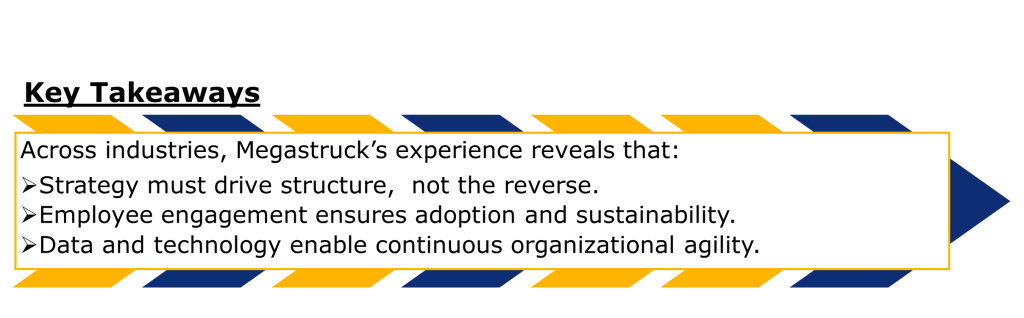
Organizational design is not a one-time project, it is a continuous evolution, aligned with strategic direction and human potential.
CHALLENGES AND SUCCESS FACTORS
While redesigning organizations offers immense benefits, it also presents challenges. Common obstacles include leadership resistance, change fatigue, and misalignment between new structures and existing cultures.
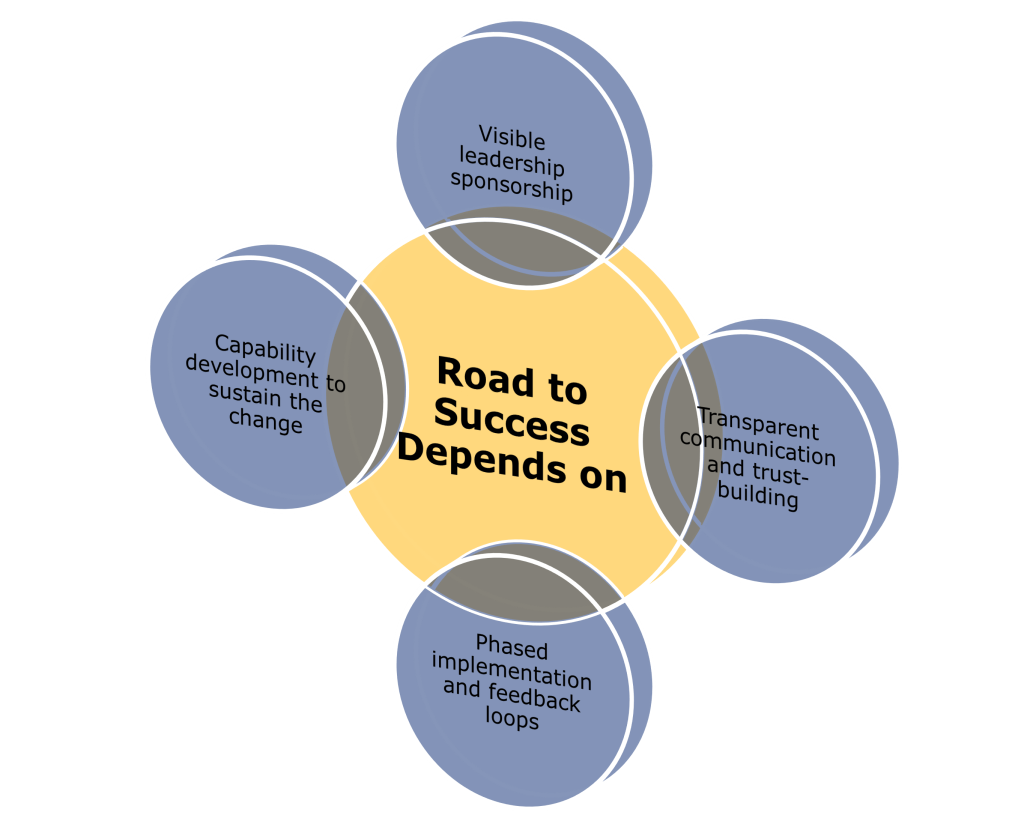
When managed well, redesigns unlock lasting transformation.
CONCLUSION
Organizational design defines how strategy comes to life.
In today’s environment, agility, clarity, and empowerment are no longer optional, they are the foundation of performance and innovation.
Through a data-driven, people-centric approach, organizations can build structures that empower people, foster innovation, and sustain growth.